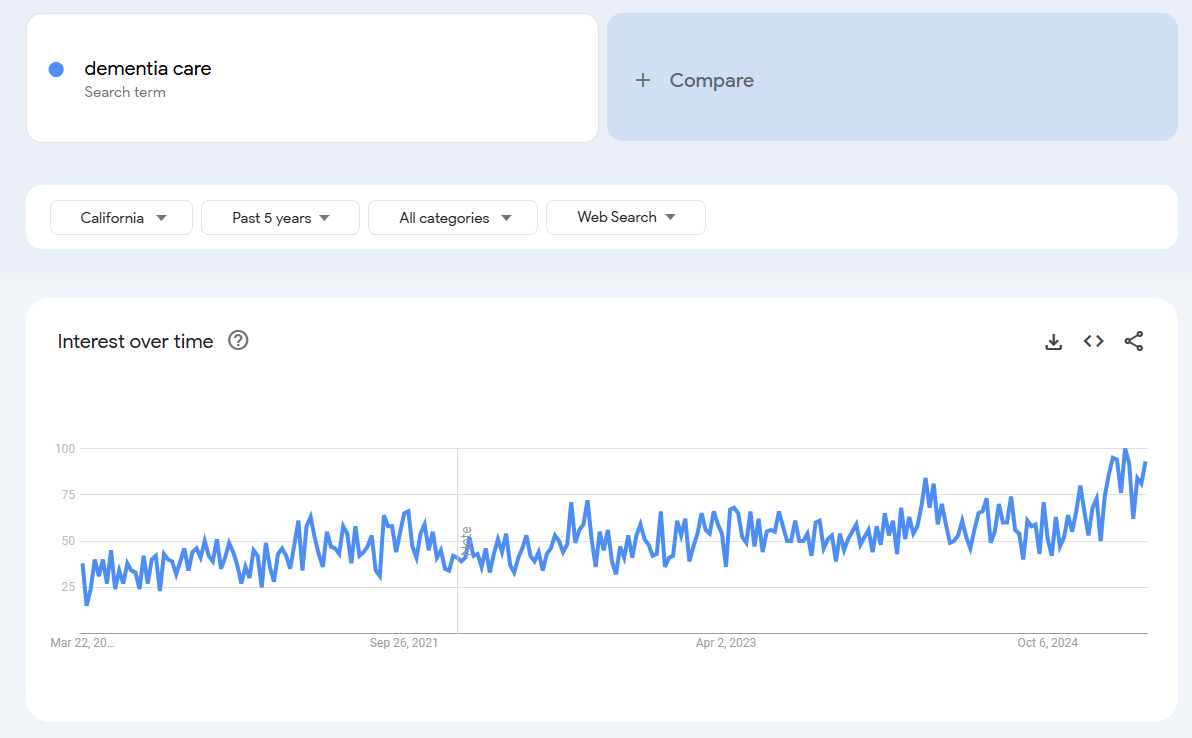
Google search data shows a clear, steady rise in searches for dementia care in California over the past five years. What began as a gradual increase has now reached all-time highs, with search interest up 145%.
This shift suggests that more families are actively seeking support as they face the challenges of caring for loved ones with dementia.
The data also indicates a broader awareness of dementia, reflecting the need for quality in-home care services for California’s aging population.
What Could Be Driving the Increase?
Several factors could be contributing to the sharp rise in dementia care searches across California. From demographic shifts to caregiver burnout, these trends reveal how the state’s aging population is reshaping demand for support.
An Aging California Population
- By 2040, 1 in 4 Californians will be 65+
- Older adults are living longer, with dementia diagnoses rising
- Families are turning to Google for in-home support solutions
In California, nearly one in four residents will be over the age of 65 by 2040. As more Californians live longer, especially into their 80s and 90s, the need for at-home senior care, particularly dementia-related care, is growing rapidly. Many of these older adults will remain in their homes, so more families are seeking resources online to help them safely age in place.
Greater Awareness and Earlier Diagnoses
Public understanding of dementia is changing the way people seek care.
- Increased public education about the disease has made early signs of dementia more recognizable to families and caregivers.
- Media coverage and awareness campaigns have helped reduce stigma, encouraging earlier conversations about memory loss.
- Better diagnostic tools now allow providers to detect dementia sooner and more accurately.
- More families are planning ahead, searching for care solutions before reaching a crisis point.
 This cultural shift toward early detection is a key driver behind the 145% increase in dementia care searches across California.
As public education around Dementia increases, the early signs and symptoms are becoming more easily recognized and understood. Thanks to awareness campaigns, improved screening methods, and greater media coverage, individuals and families are becoming more familiar with the early signs of the condition. As a result, more people are proactively researching dementia care options online, often well before a critical stage is reached.
Strain on Family Caregivers
The burden of dementia care is growing heavier for families.
 As families struggle to meet growing care demands, they’re increasingly turning to Google for answers and solutions.
Oftentimes, dementia care is provided by family members at home, but the emotional, physical, and financial toll can be overwhelming. Many primary family caregivers for dementia patients report high stress levels, and many struggle with sleep, isolation, or balancing work and care responsibilities. With limited external support and ongoing challenges in treatment, more people are searching online for help, local care services, and resources for long-term planning.
What This Means for California
As California’s elderly population grows, demand for dementia care will continue to rise. Families are looking for answers, and the state will need more trained professionals, in-home support, and community resources to meet their needs.
This surge in search interest is a clear indicator that it’s time to invest in better dementia care options for the years ahead.
If you’re searching for answers about dementia care in California, you’re not alone—and Exceptional Care is here to help. Reach out today to learn how our compassionate, in-home dementia services can support your loved one through every stage of the journey.
Searches for dementia care in California have risen 145% over the last five years, according to Google Trends, reaching all time highs. An aging population, earlier diagnoses, and heavy strain on family caregivers are driving the surge. In Los Gatos and across Santa Clara County, Exceptional Care offers in home dementia care guided by nurse care managers. Contact us to learn how we can support your family.
Behind Every Search Is a Family Reaching for Help
When someone types dementia care into Google, there is usually a worried spouse or adult child on the other side of the screen. In California, those searches have soared by 145% over the last five years, signaling growing strain as more families care for loved ones themselves with limited support. If that’s you, our dementia care team is here to help.
In this article, we explore what is driving this trend and what it means for the future of home care in California, including families in Los Gatos and the South Bay. You can also read about the broader 27% rise in home care searches.
Inside the 145% Growth in Dementia Care Searches
Google search data shows a clear, steady rise in searches for dementia care in California over the past five years. What began as a gradual increase has climbed to all time highs, with search interest up 145%. This suggests that more families are actively seeking support as they face the challenges of caring for loved ones with dementia, as we see every day in our care management work.
The data also points to a broader awareness of dementia and the need for quality in home care services for California’s aging population. Many families want their loved one to stay at home, surrounded by familiar people and routines, which is the heart of our 24 hour home care.
What Could Be Driving the Increase?
Several factors are likely contributing to the sharp rise in dementia care searches across California. From demographic shifts to caregiver burnout, these trends show how the state’s aging population is reshaping demand for support. Families can find practical answers in our FAQs.
An Aging California Population
According to the Public Policy Institute of California, nearly one in four Californians will be 65 or older by 2040. People are living longer, often into their 80s and 90s, and the risk of dementia rises with age. Many older adults will remain at home, so more families are searching online for ways to help them age in place safely, which is why we offer hourly home care and live in options.
- By 2040, about 1 in 4 Californians will be 65 or older
- Older adults are living longer, and dementia diagnoses are rising
- Families are turning to Google for in home support
Greater Awareness and Earlier Diagnoses
Public understanding of dementia is changing the way people seek care. Families now recognize early warning signs sooner and start planning before a crisis, often with help from a care manager.
- Public education has made early signs of dementia easier to recognize
- Media coverage and awareness campaigns have helped reduce stigma and encourage earlier conversations about memory loss
- Better diagnostic tools help providers detect dementia sooner and more accurately
- More families plan ahead, searching for care options before reaching a crisis point
This cultural shift toward early detection is a key driver of the 145% increase. As more people learn the signs, more families research care options well before a critical stage, a step we encourage in our dementia care planning.
Strain on Family Caregivers
The burden of dementia care often falls on families. Research published in the National Library of Medicine shows that most Alzheimer caregivers, about 78%, are family members, often with little outside help. Emotional and physical exhaustion are common and can lead to burnout and poor health. Our respite and hourly care gives families a break.
Money adds to the pressure. A study by the UCLA Center for Health Policy Research found that about 44.4% of family caregivers in California said caregiving caused them some degree of financial strain. Many struggle with sleep, isolation, and balancing work with care, which is why more people are searching online for local help and long term planning resources, like our blog.
Early Signs of Dementia to Watch For
Knowing the early signs can help families seek support sooner. If you notice several of these, talk with your loved one’s physician and consider a care manager assessment.
- Memory loss that disrupts daily life
- Trouble planning, paying bills, or following recipes
- Getting lost in familiar places
- Repeating questions or stories
- Changes in mood, personality, or sleep
- Withdrawing from friends and activities
What In Home Dementia Care Looks Like
Good dementia care at home is calm, structured, and attentive. At Exceptional Care, trained caregivers recognize behavioral cues, reduce confusion, and keep predictable routines, while nurse care managers oversee the plan and adjust it as needs change. Learn more on our dementia care page.
- Gentle redirection and consistent communication
- Familiar daily routines and meaningful activities like music and conversation
- Help with bathing, dressing, meals, and medication reminders
- Fall prevention and home safety checks
- Regular updates for families through our online portal
Creating a Dementia Friendly Home
Small changes at home can reduce confusion and risk. Good lighting, clear walkways, labeled cabinets, door alarms for wandering, and a quiet, uncluttered space all help. Keeping familiar photos and objects nearby can also bring comfort. Our care managers can walk through the home and suggest practical updates during an in home assessment.
Why a Nurse Care Manager Matters for Dementia
Dementia changes over time, and care must change with it. A nurse care manager assesses cognitive changes and safety risks, coordinates with physicians, attends appointments when needed, and coaches caregivers on new approaches. This oversight helps catch changes early and keeps care steady, as shown on our geriatric care management page.
Questions to Ask a Dementia Home Care Agency
Not all home care agencies are prepared for dementia. Before choosing a provider, ask these questions, and compare the answers with our approach on the dementia care page.
- How are caregivers trained in dementia communication and redirection?
- Who oversees the care plan, and how often is it updated?
- How do you handle wandering, sundowning, or agitation?
- Will the same caregivers come consistently?
- How will our family receive updates?
- Is the agency licensed in California?
Caring for the Family Caregiver
Supporting someone with dementia can be lonely and exhausting. Family caregivers often put their own health last. Respite care, support groups, and honest conversations with family can help. Even a few hours of hourly care each week can protect your own wellbeing and help you stay patient and present.
What This Means for California
As California’s older population grows, demand for dementia care will keep rising. The state will need more trained caregivers, more in home support, and stronger community resources to meet families’ needs. This surge in search interest is a clear sign that it’s time to invest in better dementia care options, including 24 hour home care for advanced needs.
Planning Ahead for Dementia Care
Families who plan early often face fewer crises. Start by documenting your loved one’s wishes, organizing medical and legal paperwork, and learning about care options while your loved one can still take part in decisions. A free consultation can help you map out next steps.
- Talk with your loved one’s physician about diagnosis and expectations
- Review legal and financial documents, such as powers of attorney
- Assess home safety for falls and wandering risks
- Explore care options, from hourly visits to 24 hour care
- Build a support team of family, caregivers, and a care manager
Dementia Care in Los Gatos, Santa Clara County
Exceptional Care supports families in Los Gatos, Saratoga, Sunnyvale, Cupertino, Campbell, San Jose, Los Altos, and Palo Alto. We’re a California licensed home care agency, license #434700204, providing private pay, non medical support in homes and assisted living communities. Our office is at 761 University Avenue in Los Gatos, and we’re members of the Aging Life Care Association, as noted on our about page.
You Are Not Alone
If you’re searching for answers about dementia care in California, you’re not alone, and Exceptional Care is here to help. Call or text 650.582.3020 or reach out today to learn how our compassionate, nurse care manager led dementia care can support your loved one through every stage.